
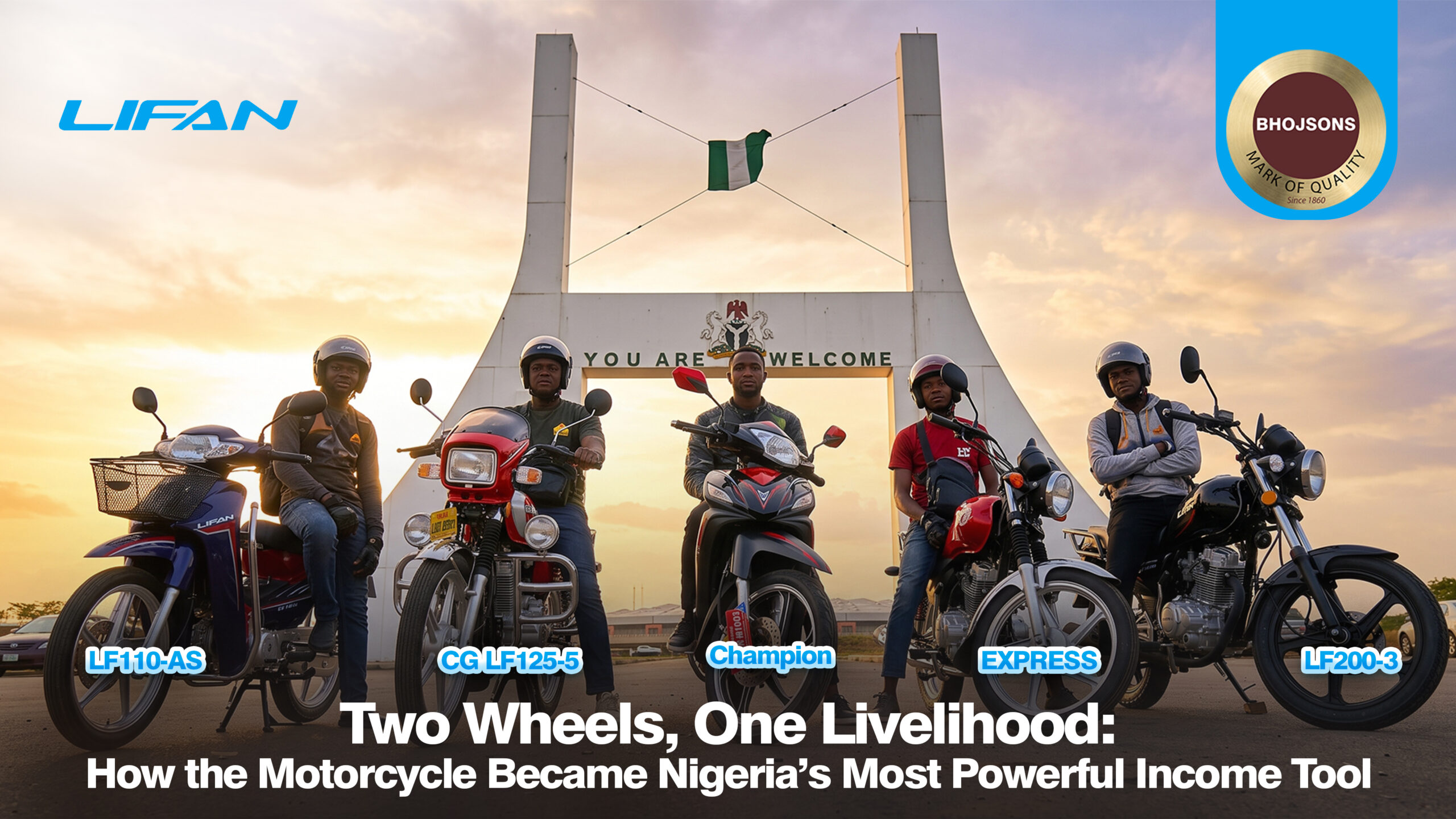
BHOJSONS Group and LIFAN Motorcycles
One Livelihood: How the Motorcycle Became Nigeria’s Most Powerful Income Tool
The Sound of a Country Going to Work
Before most of Lagos has finished its first cup of tea, the roads are already alive with a familiar sound — the steady rev of engines pulling into traffic, weaving between Danfos, carrying Nigeria to work. For millions of families, that sound is not noise. It is the sound of income beginning.
In a country where formal jobs are scarce and opportunity often has to be built rather than found, the motorcycle has quietly become one of the most important economic tools in Nigeria. It is transport, yes. But more than that, it is a business in the hands of anyone willing to work.
This is a story the numbers rarely capture and headlines rarely celebrate: the story of how two wheels became a livelihood — and how brands like LIFAN Motorcycles, distributed in Nigeria by BHOJSONS GROUP, are helping ordinary people turn a machine into a means of survival, dignity, and growth.
An Economy That Moves on Two Wheels
Across Nigeria, an estimated eight million commercial motorcycle riders are on the roads today — a figure recently underscored when the Federal Road Safety Corps launched a nationwide digital registration drive for okada and tricycle operators in 2026 [FRSC, 2026]. That single statistic tells you something profound: this is not a fringe activity. It is one of the largest employers in the country, operating almost entirely outside the formal economy.
The reason is simple. Where salaried jobs are limited, the barrier to earning through a motorcycle is low, the income is immediate, and the returns are daily rather than monthly. Research on Nigeria’s motorcycle-taxi sector found that the overwhelming majority of operators — around 86% — earn above the national minimum wage, making it a genuine route out of poverty rather than merely a stopgap [Arosanyin et al.]. The International Labour Organization has long noted that in developing economies, informal self-employment of exactly this kind is not a symptom of failure but a critical engine of livelihood and resilience [ILO, 2018].
In other words: for a young school-leaver, a returning migrant, or a family breadwinner, a motorcycle is often the fastest, most realistic path to earning a living with their own hands.
More Than a Purchase — A Business Decision
Here is where the conversation has to shift. When a Nigerian buys a motorcycle for commercial use, they are not buying a toy or even simply a vehicle. They are buying an income-generating asset. And like any business investment, the quality of that asset determines the quality of the return.
This is the difference too many first-time buyers learn the hard way. A cheap, poorly built machine may cost less at the point of sale — but if it spends days in the mechanic’s yard, drinks fuel, and breaks down under the weight of daily commercial use, it does not save money. It destroys income. Every day off the road is a day of earnings lost.
A reliable machine, by contrast, does the opposite. It shows up every morning. It runs efficiently. It handles Nigerian roads, Nigerian loads, and Nigerian distances without complaint. That reliability is not a luxury feature — it is the entire business model.
This is precisely the space LIFAN occupies: motorcycles built to work, not just to sell.
Built for the Nigerian Road — and the Nigerian Hustle
Nigerian roads are their own examination. Potholes, unpaved stretches, heavy traffic, long hours, and real loads test a machine in ways a showroom never will. A motorcycle that earns its keep here has to be durable, fuel-efficient, comfortable enough for all-day use, and simple to service when it eventually needs attention.
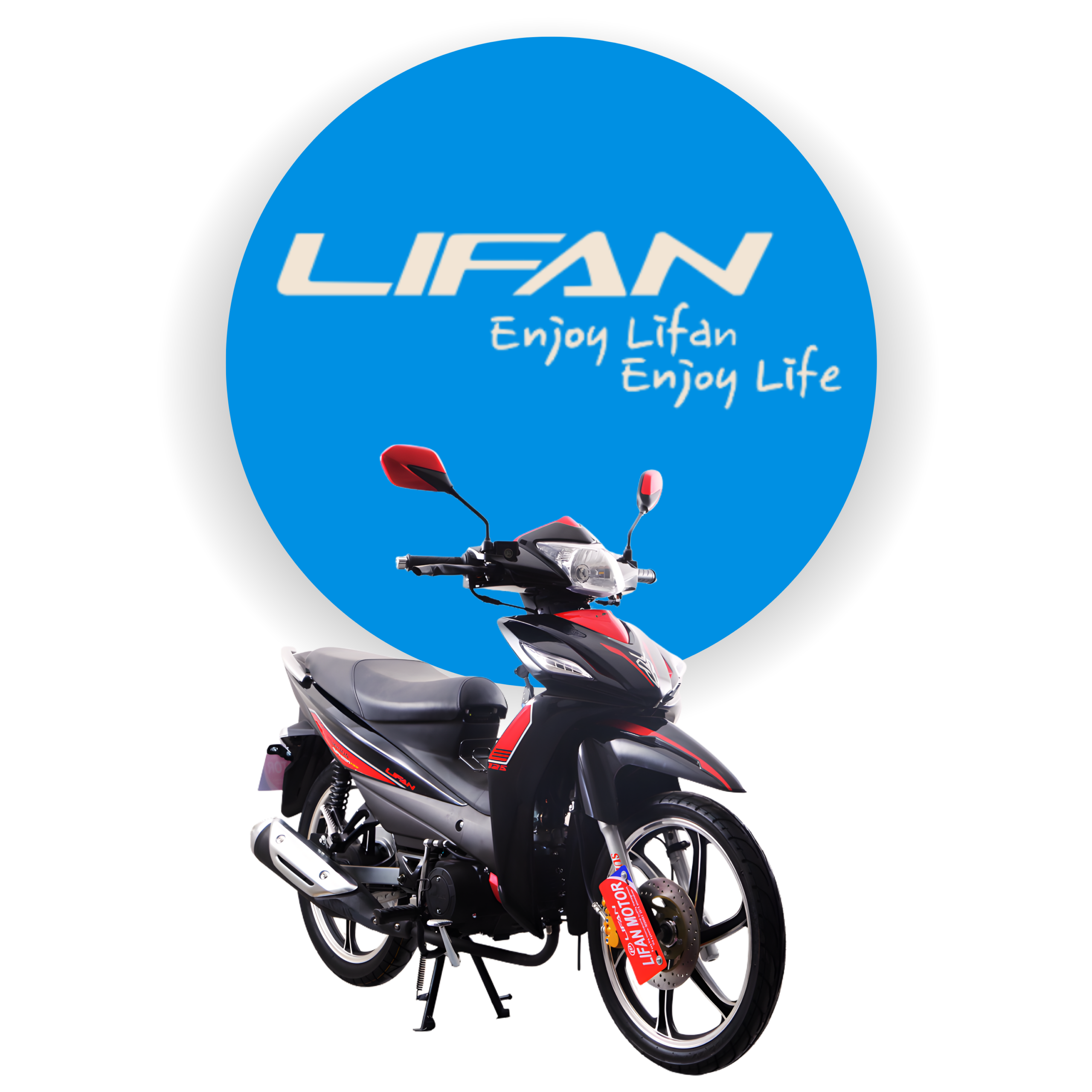
What sets LIFAN’s Nigerian range apart is that it is built around exactly these working realities. This is not one motorcycle sold to everyone — it is a lineup organised around how people actually earn a living, from the first-time commuter to the full-time commercial operator.
For the rider whose priority is fuel economy and low running cost, the 107cc class — the Bullet, Vault, JOJO, and LF110-AS — delivers exceptional mileage of around 1.4 litres per 100km, lightweight handling, and easy maintenance. These are the machines that turn a modest daily income into a workable margin, because on tight fares, fuel efficiency is profit.
For the classic okada workhorse, the 125cc street range — the CG LF125-5, the Champion LF125-26C, and the LF150-5 — brings more power (up to 8.0 kW) and the rugged durability that daily passenger runs demand, while still returning strong fuel economy. As one professional rider said of his Champion, it fits a working lifestyle perfectly — and knowing it is imported by BHOJSONS GROUP gives complete confidence in its quality.
For riders moving heavy loads and running long-haul delivery, the XPRESS is built for the job — a large 16-litre fuel tank for fewer stops on long routes, a frame built to carry weight, and the endurance that dispatch and logistics work requires. LIFAN files it, plainly, under “Okada & Delivery Operations.”
And for the operator ready to scale up — into ride-hailing, intercity runs, or a more powerful commercial platform — the LF200-3 steps up to a 196.9cc engine, front disc braking, a top speed of 102 km/h, and the comfort to carry passengers and cargo across longer distances. LIFAN markets it, fittingly, for “go-getters who demand more from every ride.”
Across every model, the priorities stay constant: reliability, fuel economy, comfort, and low maintenance cost — the qualities that separate a machine that costs money from one that makes it. Whatever the rider’s stage — starting out, running daily, or building a fleet — there is a LIFAN engineered for that exact kind of work.
The Rider Who Built a Business
Consider a familiar Nigerian story. A young man finishes school, searches for formal work, and finds none. Rather than wait, he acquires a motorcycle — often through financing rather than a lump sum he does not have. Within days, he is earning.
At first, the income covers his own needs. Then it covers his family’s. In time, some riders save enough to acquire a second machine, hand it to another rider on an agreed arrangement, and begin earning from two. What began as survival becomes a small enterprise. What began as a single motorcycle becomes the foundation of a livelihood, and sometimes of a fleet.
This is not an unusual story in Nigeria. It is one of the most common paths to self-made income in the country — and the quality and reliability of that first machine is very often what decides whether the story ends in growth or in frustration.
Ownership Made Possible: The Role of Financing
For many aspiring riders, the single obstacle between them and income is not willingness. It is the upfront cost. A motorcycle that can pay for itself many times over is still out of reach if the entire price must be paid at once.
This is why access to financing matters as much as the machine itself. Through BHOJSONS GROUP’s finance partnership with LAPO Microfinance Bank, structured “Own Now, Pay Later” options make it possible for a rider to begin earning with the very asset they are still paying for — turning the motorcycle from an expense into a self-funding investment. For a first-time owner, that access can be the difference between watching the opportunity and living it.
Why Distribution and After-Sales Decide Everything
A motorcycle is only as reliable as the network standing behind it. An income asset that cannot be serviced quickly, or whose genuine spare parts are hard to find, becomes a liability the moment it needs attention — because every hour it waits is an hour of lost earnings.
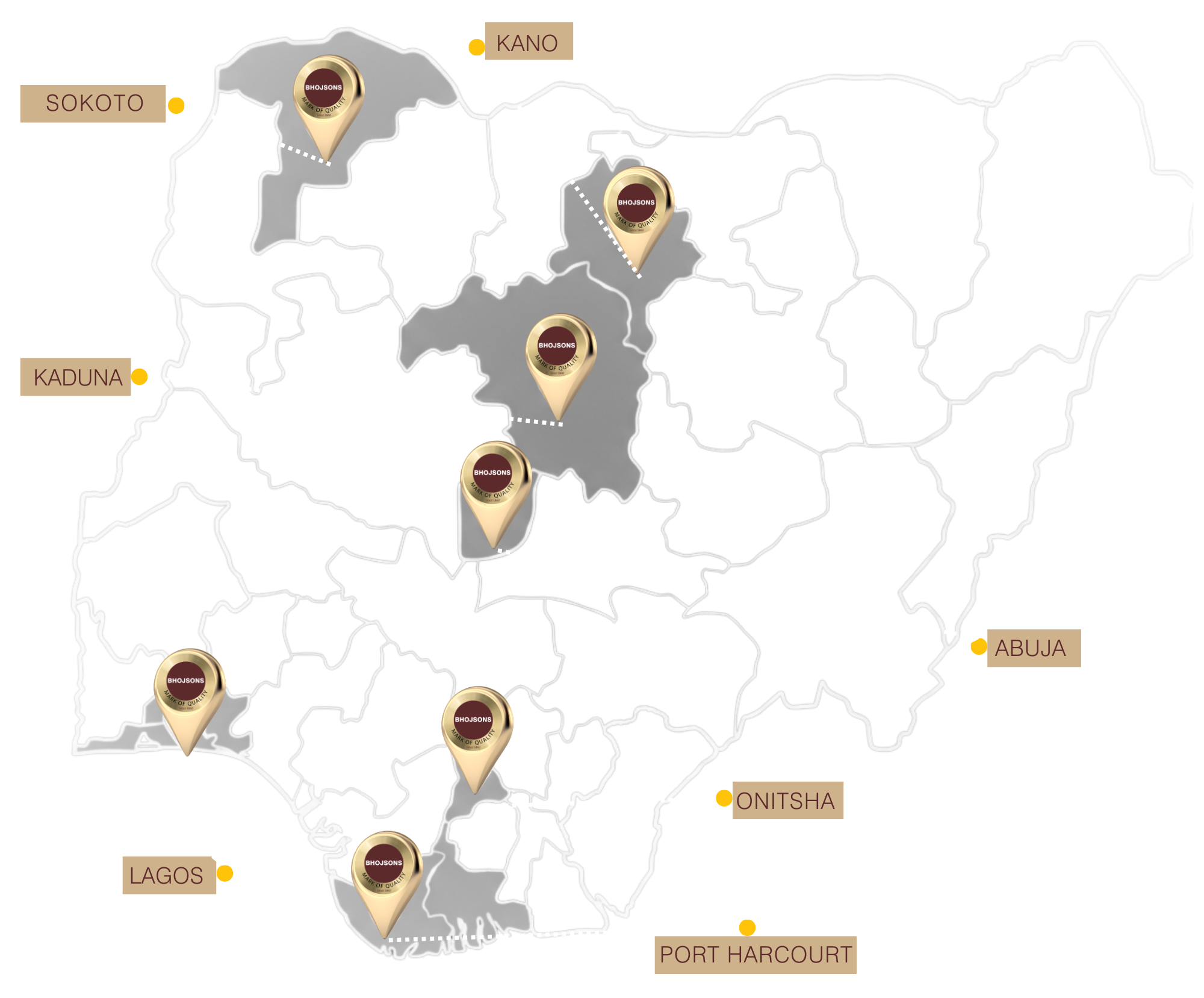
This is where BHOJSONS GROUP adds value that reaches far beyond the sale. As importer, distributor, and service provider, the Group backs LIFAN with a nationwide presence: 7 regional branches, each supported by a redistribution warehouse, a strong logistics framework, and dependable after-sales support. For a rider whose daily bread depends on staying on the road, that support network is not a footnote. It is part of the product.
Every LIFAN machine also carries the Bhojsons Mark of Quality — the endorsement of a business house with a legacy of over 160 years in Nigeria. For a buyer making one of the most important financial decisions of their life, that assurance carries real weight.
The Real Return on the Right Machine
It is tempting to judge a motorcycle by its sticker price. But for anyone buying to earn, the real measure is different: how much it costs to run, how rarely it breaks down, how long it lasts, and how much income it makes possible over its working life.
By that measure, the cheapest machine is rarely the most economical, and the reliable machine rarely the most expensive. A motorcycle that stays on the road, sips fuel, and endures for years does not just save money — it generates it, day after day. Reliability, in the truest sense, pays for itself.
A Machine, a Livelihood, a Future
In Nigeria, opportunity is often something you build rather than something you are handed. And for millions of people, the motorcycle has become the tool that makes building possible — a way to earn, to provide, to grow, and to hold onto dignity in a demanding economy.
Through brands like LIFAN, distributed and backed by BHOJSONS GROUP, that tool is made more reliable, more accessible, and more capable of carrying the weight of the hopes placed on it. Because for the family that depends on it, a motorcycle is never just a motorcycle.
It is the difference between waiting for a living and riding toward one.
To find the right LIFAN model for your needs — or to ask about financing options — scan the QR code, visit bhojsonsgroup.com, or contact your nearest Bhojsons branch for a quote.
References
- Federal Road Safety Corps (FRSC). (2026). Nationwide Registration of Motorcycle and Tricycle Operators.
- Arosanyin, G. T., et al. Informal Self-Employment and Poverty Alleviation: Empirical Evidence from Motorcycle Taxi Riders in Nigeria.
- International Labour Organization (ILO). (2018). Women and Men in the Informal Economy: A Statistical Picture. https://www.ilo.org
- World Bank. Nigeria — Jobs and Informality. https://www.worldbank.org/en/country/nigeria
Primary SEO Keywords
LIFAN motorcycle Nigeria, buy motorcycle Nigeria, okada business Nigeria, motorcycle income Nigeria, commercial motorcycle Nigeria, motorcycle financing Nigeria, Bhojsons LIFAN